Research, discovery, and scoring
Projects, workflow types, generated agents, records, runs, outputs, and learnings can support audience research, prospect discovery, community discovery, and prioritization.
Hermes Control Center is not just a marketing claim. We use it as our own AI operations system to find high-fit audiences, create content, draft outreach, route human review, and learn what to improve next.
If the work can be described, reviewed, and repeated, Hermes can operate it.
Projects, workflow types, generated agents, records, runs, outputs, and learnings can support audience research, prospect discovery, community discovery, and prioritization.
Outreach, social content, Kickstarter updates, community posts, and partner pitches can be generated as reviewable outputs and routed to Email Review or Approvals before humans publish or send them.
Schedules, manual Run now, run inspection, tasks, and learnings support morning discovery, midday content, afternoon review, and evening learning runs.
Hermes can record learnings and conversion notes today. Automated imports from Kickstarter, website analytics, LinkedIn, X, Reddit, or email replies should be added as integrations when those channels are connected.
We split self-marketing into five Hermes projects because each part of the GTM loop has a different goal, artifact contract, approval risk, and daily cadence.
Workflow: Outreach and GTM
Find potential backers, creators, newsletters, podcasts, communities, AI automation consultants, SaaS founders, and launch partners who may support or share the campaign.
Find and qualify 30 to 50 high-fit potential Kickstarter backers, promoters, creators, newsletters, podcasts, agencies, founders, and AI automation consultants each run.
Prioritize public evidence of interest in AI workflows, local AI, agent systems, automation, SaaS growth, indie launches, Product Hunt, Kickstarter, or productivity tools.
Produce 10 personalized outreach drafts, 5 community or social post ideas, and a daily promotion recommendation pack.
Keep every outreach draft and post Pending Review until a human approves it.Cloud-managed campaign planning with local runtime execution.
Multi-agent discovery, channel qualification, copywriting, quality review, and learning loop.
Structured records for ranked targets, source URLs, fit reasons, personalization notes, safe public channels, and recommended action.
Human-in-the-loop Email Review and Approvals before anything is sent or posted.Hermes Control Center is launching on Kickstarter with early access starting at $9.99.
The product helps users design projects in the cloud, deploy agent teams to a local runtime, run structured workflows, inspect tasks, review outputs, and capture learnings.
Differentiator: most AI tools produce chat text; Hermes produces runs, tasks, records, approvals, outputs, deliveries, and learnings.
Compliance differentiator: no auto-spam, no guessed private emails, no login-only scraping, all outreach remains Pending Review.Create a Kickstarter promotion and backer discovery project for Hermes Control Center.
Find high-fit backers, creators, newsletters, podcasts, communities, AI automation consultants, SaaS founders, agencies, founders, and growth teams who may care about AI workflows, local runtime execution, multi-agent operations, or Kickstarter software launches.
Produce ranked targets, safe public channels, personalization notes, outreach drafts, community post ideas, daily promotion recommendations, and learning notes.
All outreach and posts must remain Pending Review until a human approves them.Workflow: Content
Turn product positioning, founder observations, run results, and campaign progress into daily LinkedIn, X, Reddit, Indie Hackers, Kickstarter update, and short video drafts.
Create a daily founder-led content pack that explains Hermes through real product proof, live self-marketing runs, and practical operator lessons.
Generate one LinkedIn post, three to five X posts, one Kickstarter update draft, one community feedback post, one founder story, and one short demo caption.
Use each channel's tone and constraints instead of recycling the same generic post.
Route every publishable asset to review before publishing.Project examples, runs, task coverage, records, outputs, approvals, learnings, local runtime onboarding, and cloud control.
Founder-led narrative: prompt versus workflow, AI chat versus AI operations, local execution, human review, and repeatable daily operating systems.
Content can reference real daily marketing pack metrics, rejected targets, approved drafts, and next-day learnings.Hermes is being used to market itself, which creates a credible build-in-public story.
The product has visible surfaces for Projects, Deployments, Runs, Tasks, Outputs, Email Review, Approvals, Records, Deliveries, and Learnings.
Differentiator: the content engine is not just a copy generator; it is connected to run evidence and review workflow.
The message stays practical and founder-to-founder: no hype, no guaranteed results, no auto-posting.Create a founder-led launch content engine for Hermes Control Center.
Generate daily content for LinkedIn, X, Reddit, Indie Hackers, Kickstarter updates, founder stories, product demo captions, and build-in-public posts.
Use real product proof: cloud-managed projects, local execution, run tracking, records, outputs, approvals, and learnings.
Keep every publishable asset Pending Review and tailor each post to its channel.Workflow: Research
Continuously study who is most likely to buy, what tools they compare against, what objections appear, and which positioning should be tested next.
Identify which ICP should be prioritized next: Kickstarter creators, Product Hunt makers, indie hackers, AI automation consultants, SaaS founders, agencies, RevOps teams, or no-code automation users.
Produce competitor comparisons, pain point libraries, objection libraries, pricing and packaging recommendations, landing page improvement ideas, and message test ideas.
Turn broad market questions into sourced findings, confidence scores, recommended actions, and executive-ready decision memos.Research workflow type with sourced findings, structured records, outputs, confidence scoring, and recurring learning loops.
Ability to compare audiences, competitors, channels, objections, and conversion pages as separate artifacts.
Outputs can be routed into Learnings and used to update project descriptions, feature highlights, proof points, pricing copy, and public pages.Hermes supports multiple workflow types beyond outreach: Research, Content, Operations, General AI operations, and Outreach and GTM.
Differentiator: research does not end as a loose chat answer; it becomes records, recommendations, outputs, and next-run instructions.
The product positioning can be tested against real audiences: agencies, founders, operators, creators, and automation builders.Create an ICP and competitor research project for Hermes Control Center.
Analyze target segments including Kickstarter creators, Product Hunt makers, indie hackers, AI automation agencies, SaaS founders, Zapier users, Make users, n8n users, Clay users, Apollo users, Smartlead users, and AI agent builders.
Produce ICP rankings, competitor comparisons, pain point libraries, objection libraries, landing page suggestions, pricing suggestions, and message testing ideas.
Every finding must include source context, confidence, and recommended action.Workflow: Outreach and GTM
Find AI automation consultants, systems integrators, lead generation agencies, and digital marketing agencies that could use Hermes to standardize and scale client delivery.
Find 50 potential AI automation agencies, systems integrators, RevOps consultants, lead generation agencies, and digital marketing agencies.
Identify 10 high-priority partner candidates that already sell research, outreach, reporting, client delivery, workflow automation, or AI implementation services.
Produce partnership pitch drafts, LinkedIn messages, agency reward copy, and recommended next actions.
Prioritize partners who can use Hermes both internally and as a client delivery platform.Reusable project templates, client-ready workflows, local runtime execution, approval gates, records, outputs, deliveries, and daily reports.
Hermes can standardize research, outreach, content, reporting, and review workflows across multiple client projects.
Human review lets agencies keep quality control while using AI to do repeatable production work.Agency pitch: use Hermes to standardize and scale AI-powered client delivery.
Differentiator: agencies get an operating platform, not just another prompt tool or one-off automation script.
The system supports workspace limits, members, local nodes, deployments, runs, tasks, approvals, and reviewed outputs.Create an agency partner discovery project for Hermes Control Center.
Find agencies, AI automation consultants, systems integrators, lead generation firms, and RevOps consultants that may use Hermes as a client-ready AI operations platform.
Prioritize partners who already sell research, outreach, reporting, automation, or AI workflow services.
Generate partner-fit scores, safe contact channels, partnership pitch drafts, LinkedIn messages, and Agency Pack reward copy.Workflow: Research or Operations
Review the website, Kickstarter page, pricing, examples, CTAs, onboarding flow, and screenshots so prospects understand Hermes quickly enough to act.
Review the website, Kickstarter campaign, project examples, pricing, onboarding, local runtime installation, CTAs, screenshots, FAQ, and reward tiers.
Produce daily conversion recommendations that make the product easier to understand in under one minute.
Identify unclear copy, missing proof, weak CTAs, confusing screenshots, onboarding friction, and objections that should be answered.
Create a daily conversion checklist with the top three changes to test next.Project Builder, generated topology, Deployments, Local Runtime, Runs, Tasks, Outputs, Records, Email Review, Approvals, Deliveries, Learnings, and public examples.
Cloud control plus local execution is the core product narrative.
The product can show an end-to-end path: describe a goal, generate agents, deploy locally, run tasks, review outputs, deliver results, and learn.Existing public pages include home, project examples, pricing, getting started, product tour, and this self-marketing case study.
Differentiator: the conversion project can inspect the same product surfaces a customer will use, then turn findings into actionable page edits.
The best proof is operational: real project descriptions, real runs, real review pages, real outputs, and visible learning loops.Create a demo and conversion optimization project for Hermes Control Center.
Review the home page, Kickstarter page, project examples, pricing, local runtime onboarding, CTA copy, screenshot placement, FAQ, and reward tiers.
Produce headline recommendations, FAQ improvements, objection handling, image and video placement ideas, reward tier copy, and a daily conversion checklist.
Use practical language and prioritize changes that help a new visitor understand the product in under one minute.Open Projects, create the five projects above, choose the closest workflow type, and paste the matching brief into the description fields.
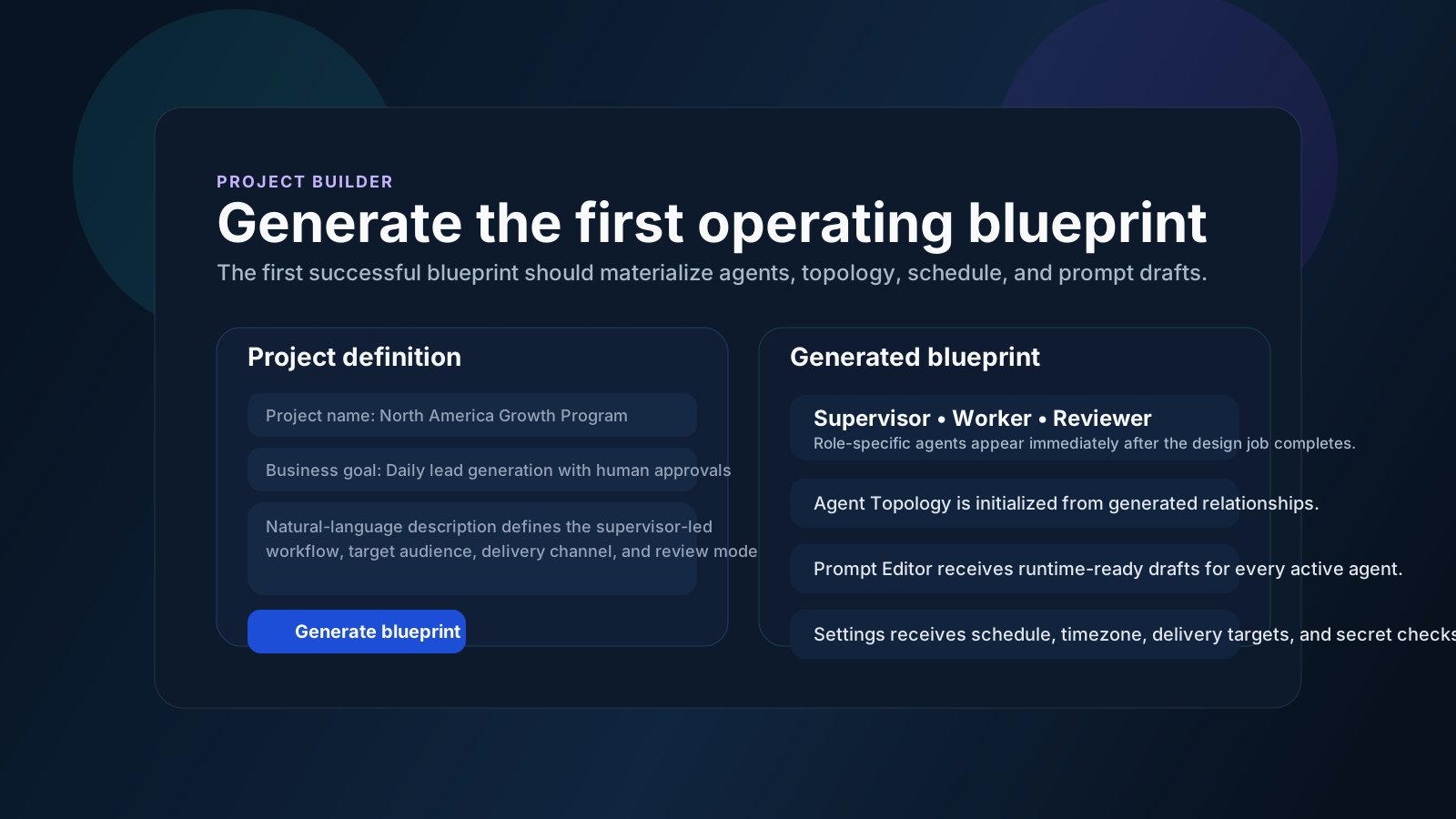
Use Generate blueprint, then inspect the topology. The key roles should include supervisor, research, channel discovery, copywriting, review, conversion, and learning agents.
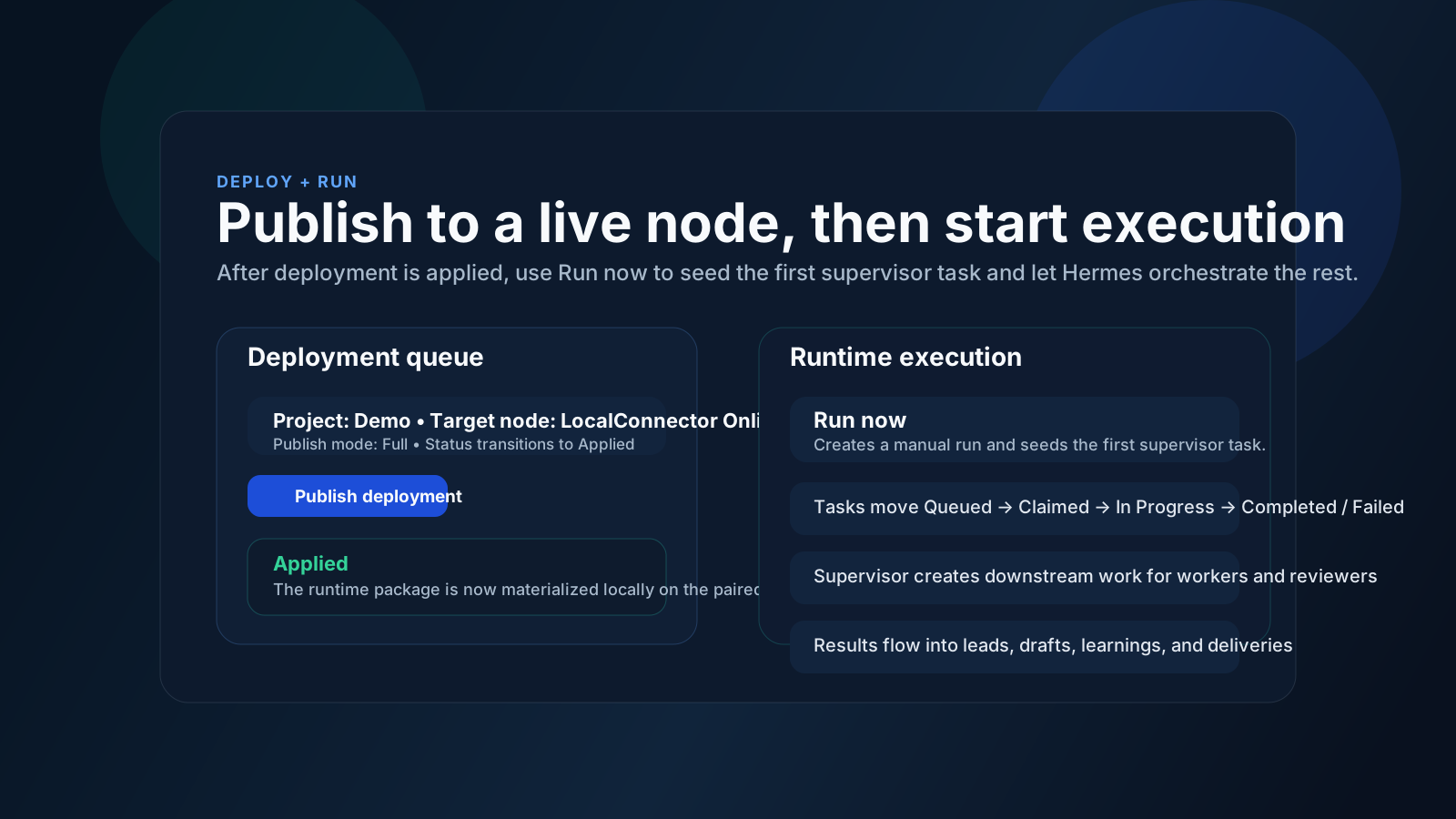
Open Deployments or the project action, publish each project to the healthy LocalConnector node, and confirm the node is online on Local Runtime.
Use Run now for the first test. After outputs look right, enable daily schedules for the discovery, content, research, partner, and conversion projects.
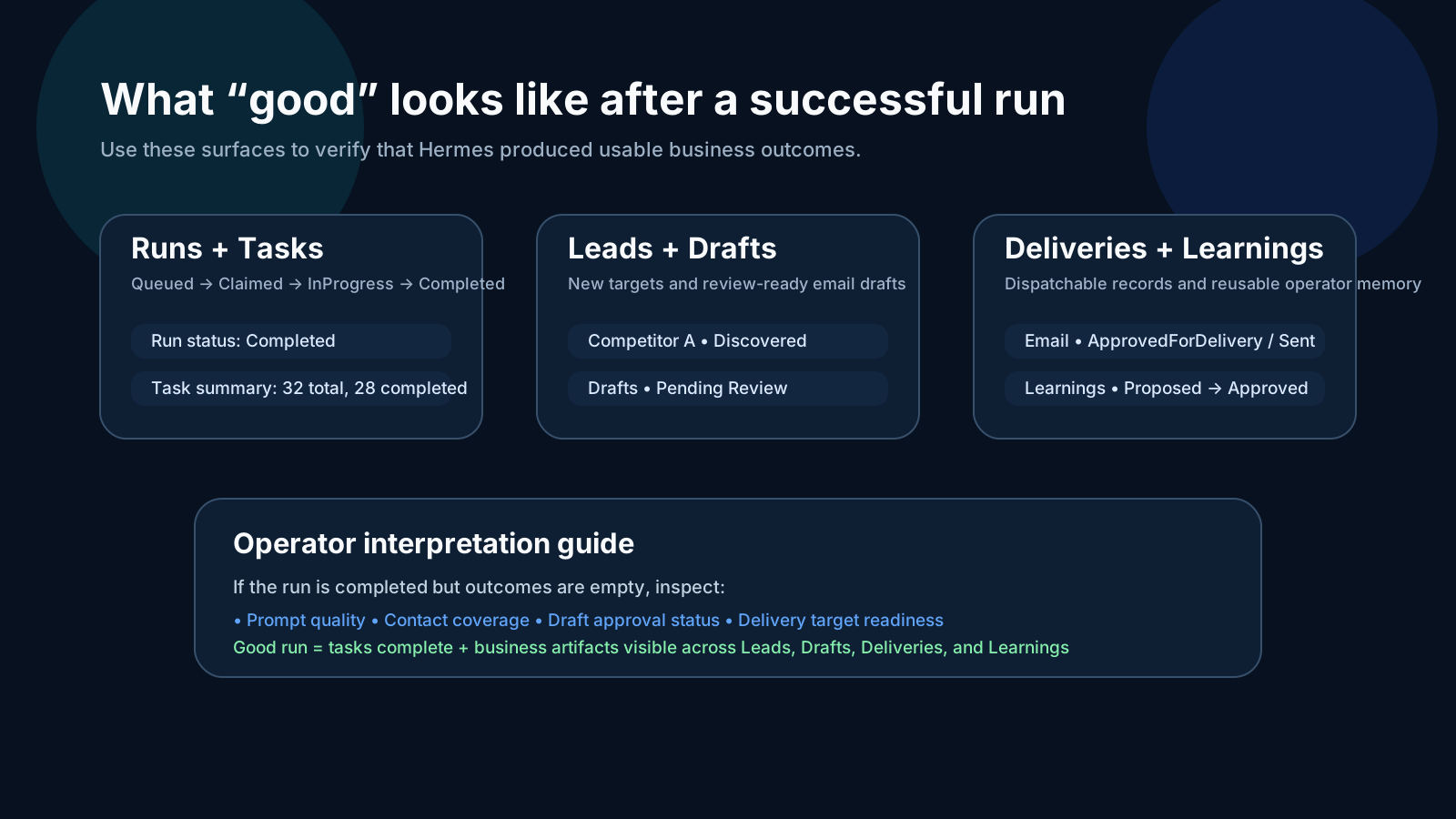
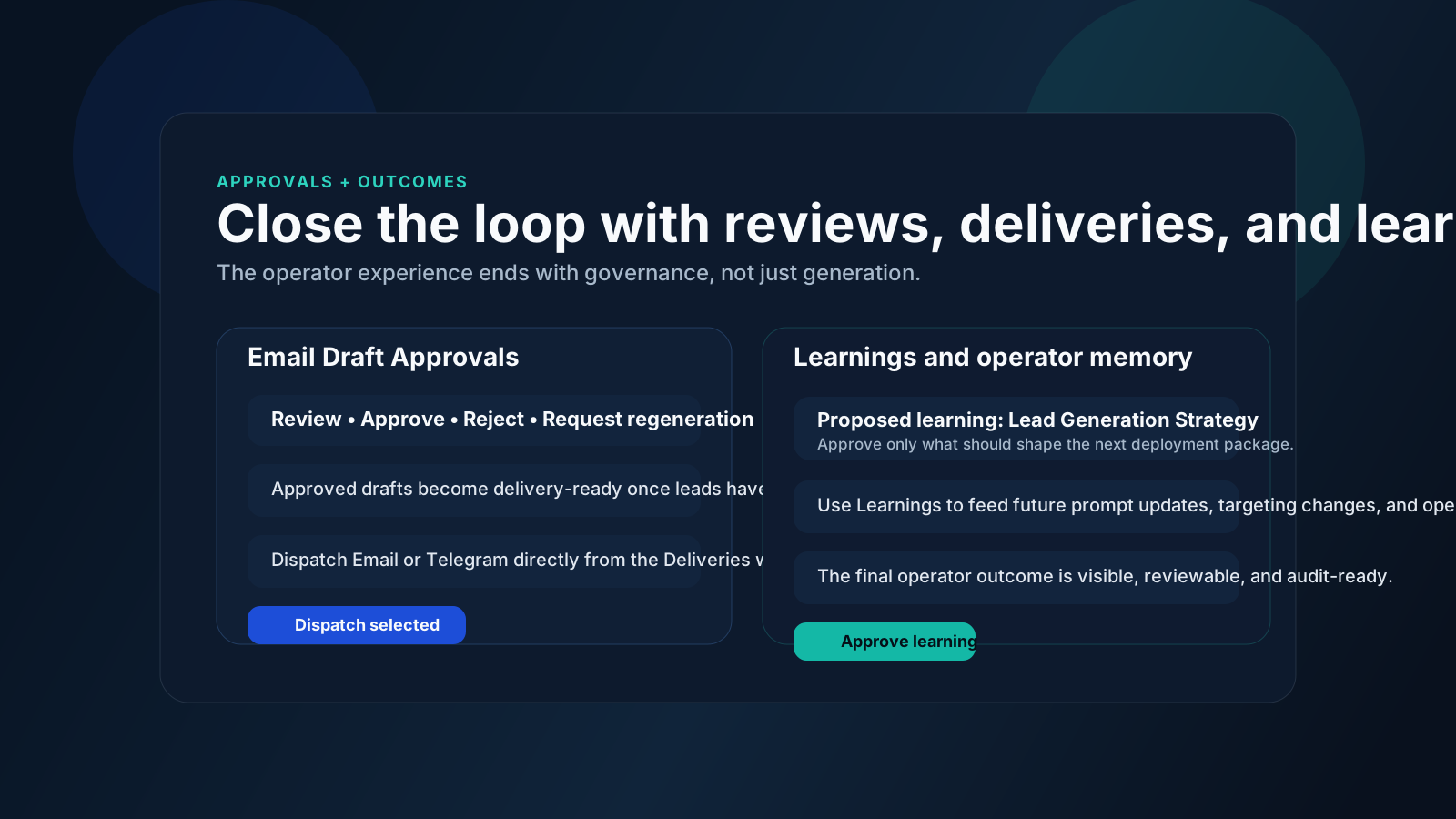
Use Email Review, Approvals, Outputs, and Records. Do not send or post automatically. Approve the strongest assets and publish manually.
Record clicks, replies, creator interest, rejected channels, and audience signals in Learnings so tomorrow's run improves instead of repeating generic work.
Run Kickstarter Backer Discovery, Agency Partner Discovery, and ICP Research to produce today's target list, channel focus, and positioning notes.
Run Founder-led Content Engine to draft one LinkedIn post, several X posts, one Kickstarter update, one community post, and one video caption.
Open Email Review, Outputs, Approvals, and Outreach Contacts. Select a small number of high-quality messages and posts for manual publishing.
Run Demo and Conversion Optimization, then record what changed, which audiences responded, which drafts were rejected, and what to test tomorrow.
Use this if you want a single "Hermes Self-Marketing Command Center" first, then split it into the five dedicated projects once the operating rhythm is working.
Create a self-marketing command center project for Hermes Control Center.

Goal:
Use Hermes Control Center itself to market and promote Hermes Control Center. Continuously find high-fit potential customers, Kickstarter backers, partners, creators, communities, agencies, and founders; generate content and outreach drafts; prepare reviewable campaign assets; track learnings; and improve future marketing runs.

Product:
Hermes Control Center is a cloud-managed, locally executed AI operations platform. Users describe a business goal, generate agent teams, deploy workflows to a local runtime, run tasks, inspect records and outputs, approve sensitive work, and deliver results.

Core message:
Run AI teams that actually work. Cloud control. Local execution. Real outcomes.

Required daily output:
- Top target audience today
- 30 to 50 discovered targets
- 10 to 20 qualified high-fit targets
- 5 creator, newsletter, or podcast opportunities
- 5 community posting opportunities
- 10 personalized outreach drafts
- 5 social posts
- 1 Kickstarter update draft
- 3 conversion improvement suggestions
- 5 rejected targets or messages with reasons
- Learning notes for tomorrow

Rules:
- Use only public information.
- Do not scrape private or login-only data.
- Do not guess private emails.
- Do not send or post automatically.
- All outreach and posts must stay Pending Review until a human approves them.
- Avoid spammy, exaggerated, or unsupported claims.
- Keep the tone founder-to-founder, helpful, practical, and concise.
- Emphasize real workflows, local execution, approvals, records, outputs, and learnings.